


Sony Semiconductor Solutions to Release Approx. 50-Effective Megapixel CMOS Image Sensor for Mobile Applications
With Superb Low-Light Performance and 4K HDR Video Recording
Delivering top-tier technology honed in the LYTIA high-end series
Sony Semiconductor Solutions Corporation
*2 Among CMOS image sensors for mobile applications. According to Sony’s research (as of the announcement on October 28, 2026).
*3 Compared with LYTIA 700, a 1/1.56-type approximately 50-effective megapixel CMOS image sensor.
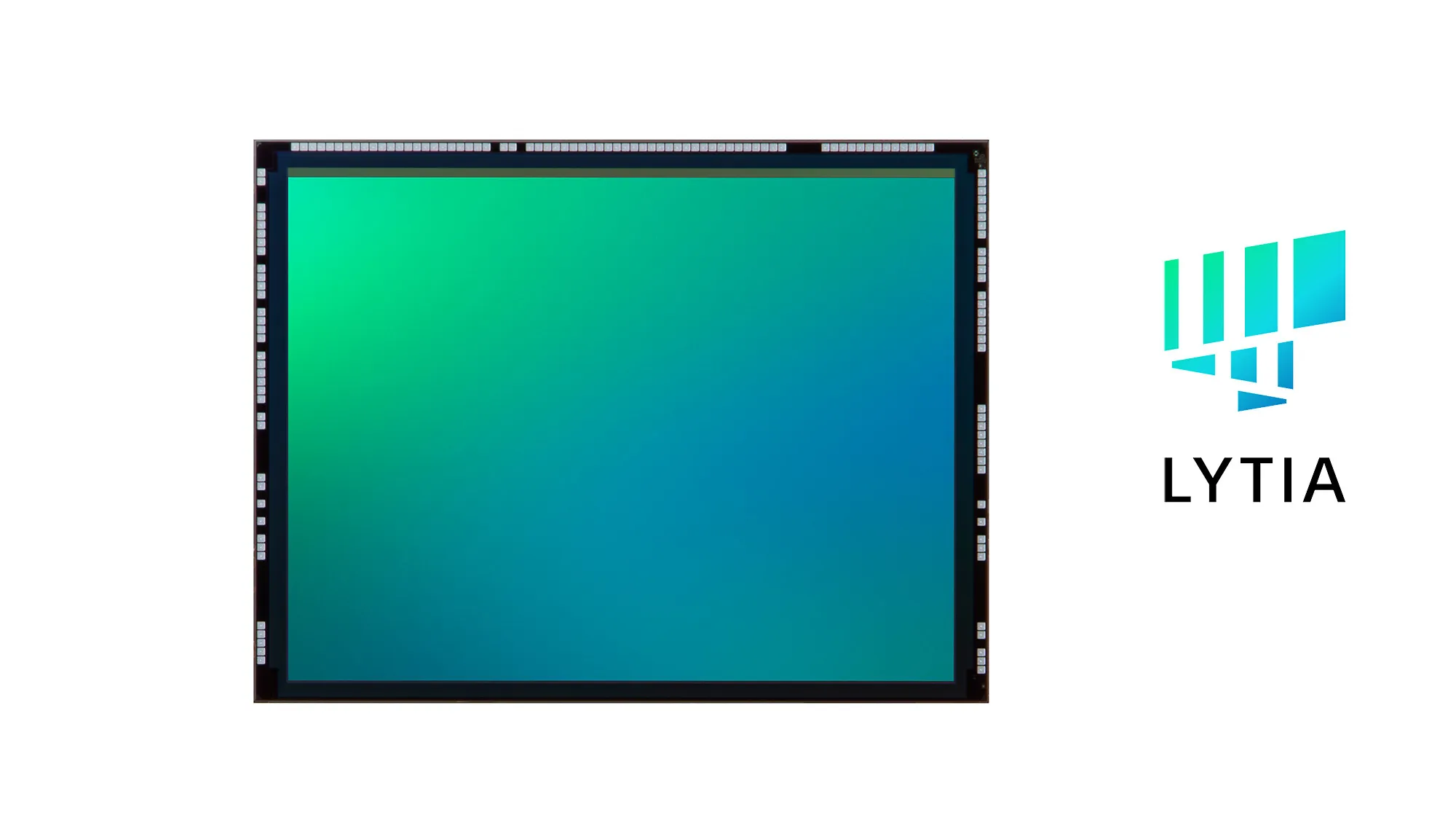
LYTIA 720 CMOS image sensor
| Model name | Mass-production shipping date (planned) |
|---|---|
LYTIA 720 1/1.56-type (diagonal 10.24 mm) approximately 50-effective megapixel*1 stacked CMOS image sensor | Early November 2026 |
Main Features
■Proprietary UHCG circuit technology delivers industry-leading*2 low-light performance
Ultra High Conversion Gain (UHCG) circuit technology that achieves high charge-to-voltage conversion efficiency suppresses image grain caused by noise in dark environments. It also reduces random noise by approximately 50% compared to a conventional product,*3 delivering the industry-leading*2 low-light performance and high-quality imaging with reduced noise in dark scenes.
Left: Conventional model LYTIA 700 Right: New model LYTIA 720
LYTIA 720 delivers brighter images while maintaining similar noise levels.
(Captured in low-light conditions at 2 lux)
■Optimized AD conversion circuits enable 4K 60 fps HDR video recording with all-pixel autofocus
The optimized circuit design reduces the time required for AD conversion, enabling 4K 60 fps HDR video recording with all-pixel autofocus while lowering sensor power consumption. This is the first 1/1.56-type LYTIA product with a 1.0 μm pixel size to support this feature. Additionally, using single-frame HDR technology for 4K 60 fps HDR video recording suppresses motion artifacts while maintaining sufficient exposure time for low-noise imaging.
Left:DCG-HDR OFF Right: DCG-HDR ON
4K HDR video recording enables natural-looking footage with reduced highlight blowout,
even in high-contrast scenes
■Hybrid Frame-HDR technology delivers a 100 dB dynamic range
Hybrid Frame-HDR (HF-HDR) is an HDR technology that combines Dual Conversion Gain-HDR (DCG-HDR) with frames recorded at short exposures. DCG-HDR imaging data, which covers low- to medium-brightness ranges with a single exposure, is merged with high-brightness range imaging data that was obtained through a short exposure in post-processing thereby expanding the dynamic range. HF-HDR technology, combined with UHCG circuit technology, delivers a dynamic range of 100 dB. This enables imaging that more closely resembles what the human eye perceives, with reduced loss of detail in shadows and highlight blowouts even in high-contrast scenes.
| Model name | LYTIA 720 | |
|---|---|---|
| Image size | 1/1.56-type (10.24 mm diagonal) | |
| Effective pixels | Approx. 50 megapixels | |
| Unit cell size | 1.0 μm(H)×1.0 μm(V) | |
| Color filter | Quad Bayer Coding | |
| Frame rate (with all-pixel autofocus) | 50 Megapixels (4:3) | 30 fps |
| 12.5 Megapixels (4:3) | 90 fps | |
| 4K2K (16:9) | 120 fps | |
| Power supply | Analog | 2.8 v/1.8 v |
| Digital | 1.1 v | |
| Interface | 1.8 v or 1.2 v | |
| Output interface | MIPI C-PHY 2/3 trio, Max. 4.5 Gsps/trio | |