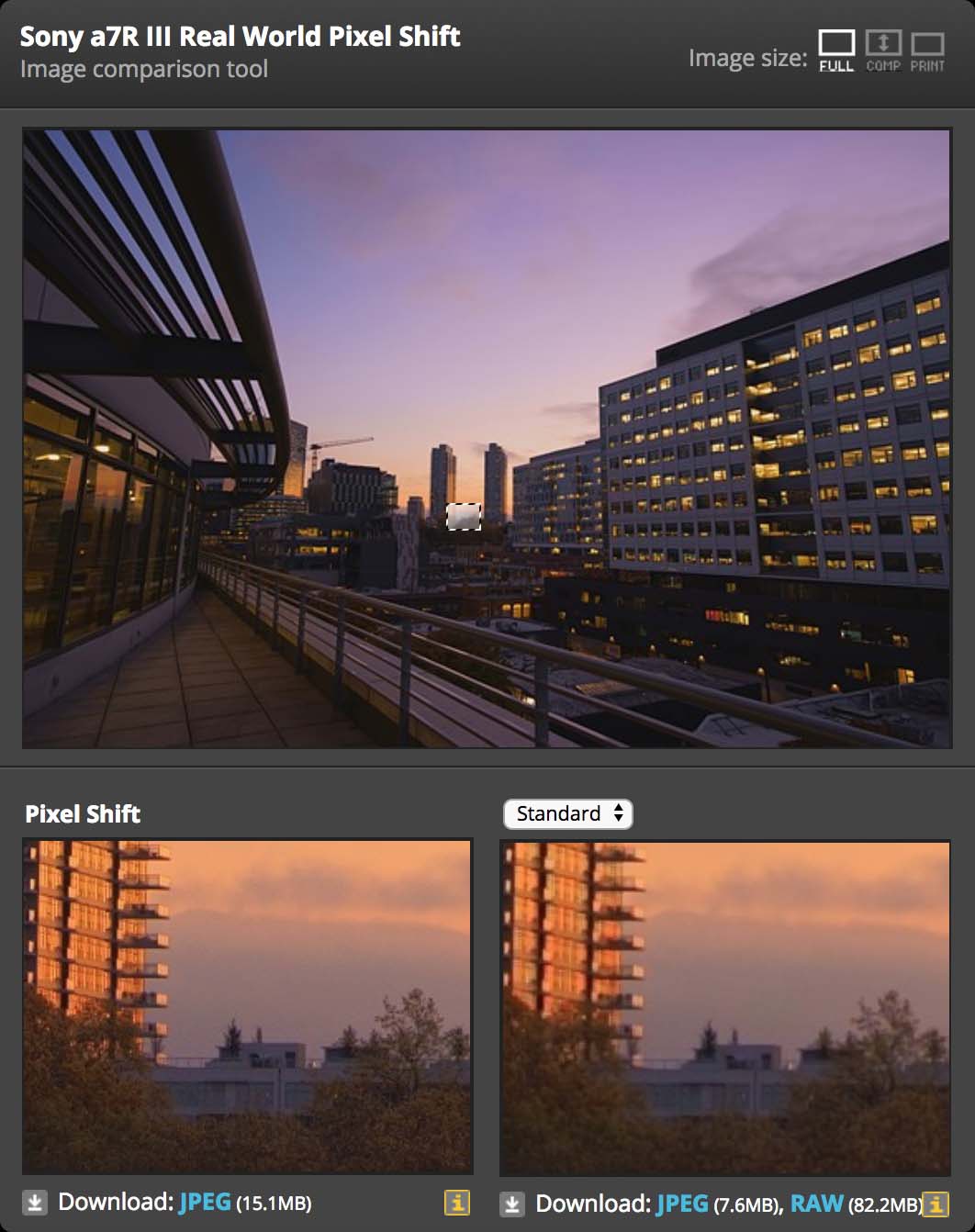
DPReview First Look at Sony a7RIII Pixel Shift Technology and It Looks Useful


DPReview gives us our first look at the Sony a7RIII’s pixel shift technology and the results are kind of interesting. A zoomed out view of the photo doesn’t show a significant difference, a 100% view of distant objects shows a pretty dramatic improvement in sharpness, while objects closer to the camera improve a little depending on subject matter. Further, DPReview states that Sony’s latest lenses can resolve the most detail with this technology so it will I am curious if there will be a go-to lens for fans of this tech.

In the Studio scene, the results change somewhat as moire disappears and additional detail is resolved, that even the 100MP Phase One can’t resolve. The technology also removes color aliasing that can be seen in the newsprint. In general, there is more detail everywhere as you pixel peep around the studio scene.

In DPReviews Words “Landscape, cityscape and architecture photographers will absolutely love this new feature paired with the already excellent sensor in the a7R III – as long as they steer clear of (or clone out) moving objects in the scene. The increase in resolution and decrease in aliasing Pixel Shift brings is obvious in both our studio scene and real world result. It’s frankly dramatic in the latter.”

The potential benefit of pixel shift technology is definitely there for some photographers, but I am unsure how much it will matter for many until it can deal with some limited motion. It’s nice to have these kinds of features in a camera, but the inability to deal with motion and tripod requirement will prevent many from using it more than a hand full of times.

Join our Sony a7 Owners Group, also follow SonyAddict on Facebook and Twitter.

Sony a7RIII: B&H Photo / Amazon / Adorama
Sony 24-105mm: B&H Photo / Amazon / Adorama
Rotolight NEO 2: B&H Photo / Amazon / Adorama

Posted in Sony a7RIII| Leave a comment

Sony a7RIII 82 Shot Buffer Depth, Unboxing, Canon Lenses, Hands-on, Editing and More

Jason Lanier gives us our first good look at the Sony a7RIII’s buffer and it is quite impressive. He uses the a7RIII continuously without filling the buffer for 82 shots shooting compressed RAW and the buffer cleared in 24 seconds. Like the Sony a9 the camera can still shoot while the buffer is being cleared and it seems to remain quite responsive. Further his Rotolight NEO 2 managed to keep up with the Sony a7RIII shooting at 10fps and each shot was properly exposed and sharp.

Join our Sony a7 Owners Group, also follow SonyAddict on Facebook and Twitter.

Sony a7RIII: B&H Photo / Amazon / Adorama
Sony 24-105mm: B&H Photo / Amazon / Adorama
Rotolight NEO 2: B&H Photo / Amazon / Adorama
Posted in Sony a7RIII| Tagged , | Leave a comment

Sony Formally Announces Impressive New Medium Format Sensors


Sony announced new medium format sensor with some impressive specs on their website today and it looks like medium format technology is starting to catch up to full frame in many ways. The IMX461 will likely be found in a future Fujifilm GFX camera, while the IMX411 will likely be seen in a Hasselblad sometime soon. Both sensors are able to shoot 4k 30p at 12bit, but the more interesting specs are the 8k 18fps at 12-bit and 8k 16fps at 12-bit features.

Sony has built a lot of high-speed sensors for cameras lately and it looks like their medium format sensors are getting some form of high-speed shooting mode at 8k. 18fps and 16fps are too slow to be useful to videographers, but they could be very useful to photographers. Maybe Sony will even incorporate the IMX411 into their own medium format camera in the distant future.

Via FujiAddict, Sony

Posted in Patents| Leave a comment

Samyang Lens Station For E-mount Officially Announced


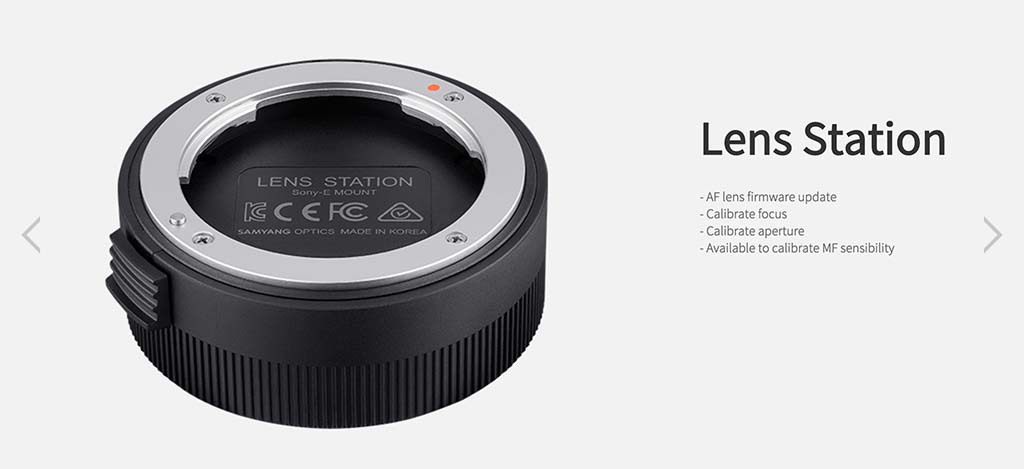
Lens Station
Lens Station is a device to customize lens performance and update firmware of Samyang autofocus lens series. Please download ‘Lens Manager’ software to update the firmware or calibrate focus, aperture and manual focusing sensitivity.

[Download Lens Manager]


[Download User Manual]

Product details

Lens Manager

Samyang AF 50mm f/1.4 FE: B&H Photo / Amazon / Adorama
Samyang AF 35mm f/2.8 FE: B&H Photo / Amazon / Adorama
Samyang AF 35mm f/1.4 FE: B&H Photo / Amazon / Adorama
Samyang AF 14mm f/2.8 FE: B&H Photo / Amazon / Adorama

Posted in 3rd Party Lens, Accessories| Tagged , , , , , | Leave a comment

Sony a7RIII vs Nikon D850 vs Sony a7RII


image courtesy of imaging-resource
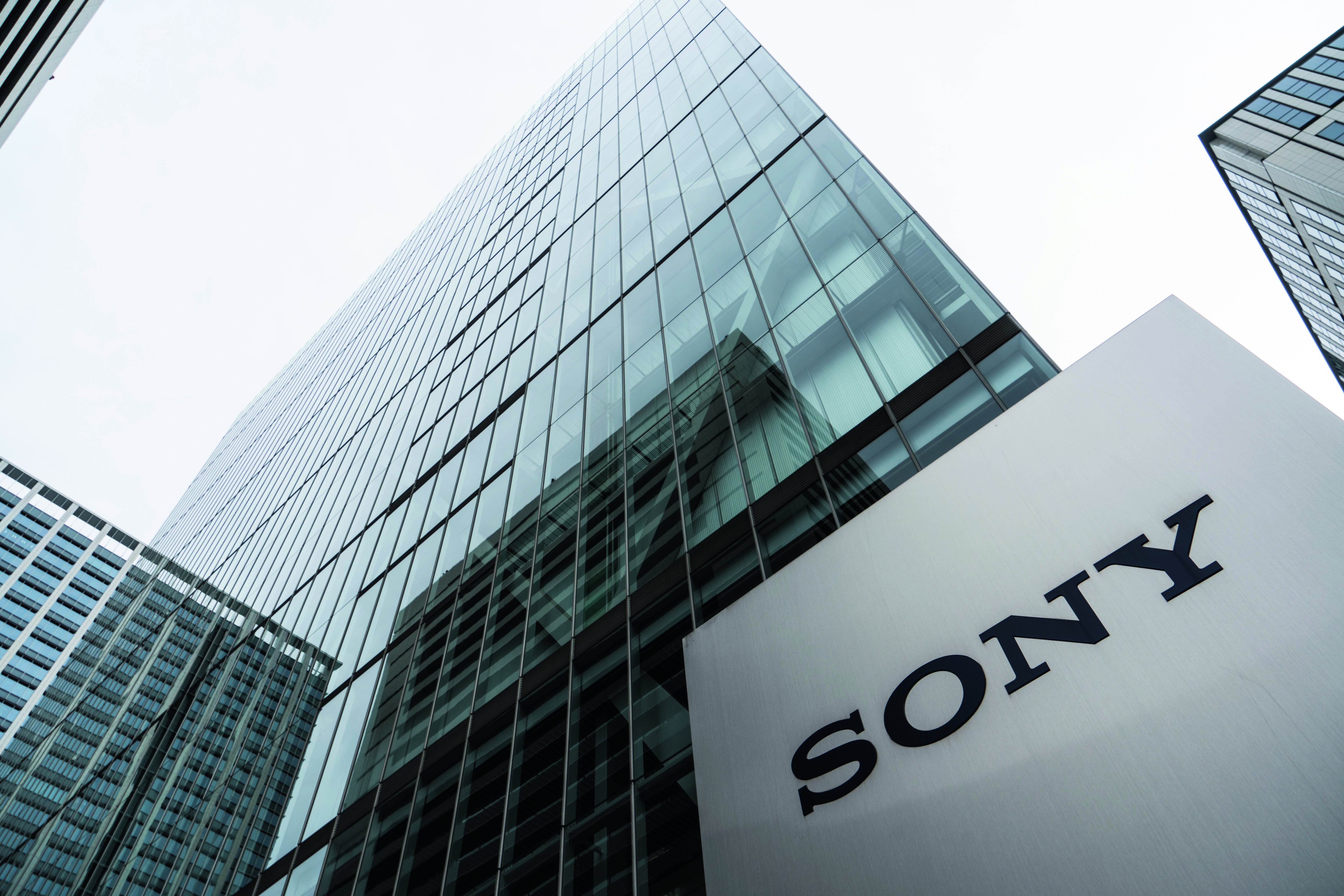
There has been a lot of talk about the Sony a7RIII vs Nikon D850 when in the dynamic range department, but does Nikon have the glass to compete with Sony? The above 100 ISO image from imaging-resource’s Sony A7R III First Shots are here seems to indicate that the Sony a7RIII has an edge over the Nikon D850 when resolving detail. IR’s article has a few more comparisons, but the above image is probably the most blatant. The other images IR has on their site show that by ISO 6400 the Sony a7RIII also has a pretty substantial noise advantage, with the Nikon D850 looking muddy in my eyes. What do you think? Take a look here.

Join our Sony a7 Owners Group, also follow SonyAddict on Facebook and Twitter.

Sony a7RIII: B&H Photo / Amazon / Adorama
Sony 24-105mm: B&H Photo / Amazon / Adorama

Posted in Sony a7R II, Sony a7RIII| Tagged | 5 Comments

Behind The Scenes: Building the Sony a9


As I said earlier today Sony is giving a lot of interviews and here is a look behind the scenes with amateurphotographer about the Sony a9. Below you will find key points from this lengthy interview.

  • “Sony is a relatively recent player in the interchangeable-lens camera market. It began by acquiring Konica Minolta in 2006, with its first genuinely homegrown DSLR being the Alpha 700 in 2007. But the most significant milestones in its progress have been the introduction of the mirrorless E-mount in 2010, followed by the full-frame Alpha 7 system in 2013.”
  • “Sony now claims to be the market leader in terms of mirrorless camera sales in Europe, and second for sales of full-frame cameras behind Canon (at least before the launch of the Nikon D850).”
  • Even though Sony has been innovative, they haven’t managed to spark loyalty like Fujifilm, which did so by delivering major firmware revisions that greatly improved camera functionality.
  • Sony is great at delivering advanced cameras, but not necessarily great at understanding photographers needs.
  • Sony Toyko works out all of the camera engineering challenges and works closely with the sensor experts in Kumamoto to deliver their vision.
  • The a9 is meant for sports and action.
  • Sony wanted to build a camera capable of shooting at 20 frames per second with a zero-blackout viewfinder while taking focus and exposure readings, and viewing the live view feed at 60fps, which required a completely new design.
  • To dial in the Sony a9’s AF “Sony worked closely with professional sports photographers, running through multiple cycles of assessing images shot with prototype cameras, analyzing any focus errors and then rapidly addressing them with new firmware in time for a new round of testing.”
  • The Sony a9 design should become the sports/action photographer camera of choice because it can constantly track subjects in motion, while DSLR’s can only track when the mirror in specific positions.
  • The Sony a9 isn’t perfect, but their first attempt is already superior to Canon/Nikon’s offering in many ways. In a generation or two, they will likely far surpass them in every way.
  • Sony still doesn’t seem to understand the potential advantage of a larger body, while their lens division makes optics as large as necessary.
  • Sony is still noncommittal about releasing firmware updates to improve their cameras after release.
  • Sony has been focusing on FE lenses over APS-C and A-mount because full frame owners tend to be more demanding of their lens collections and purchase more glass.
  • We will definitely see long lenses for the Sony a9 in the near future.
  • Sony doesn’t consider their APS-C lens selection to be complete yet
  • The possibility of new A-mount lenses is remote.
  • We won’t see Sony medium format anytime soon.
  • Kumamoto produces four million image sensors every single day.
  • It can take up to 6 months for the silicon wafers entering the Kumamoto factory to leave as a sensor.
  • Sony’s new stacked sensor in the Sony a9 is the most expensive sensor to produce at this time, which is why the Sony a9 costs so much.
  • The Kumamoto plant still shows signs the earthquake.
  • If there is an earthquake in the future Kumamoto should only be offline 2 months.
  • Sony cameras are still designed in Japan but highly skilled labor is significantly cheaper in Thailand which is why they moved pro camera and lens assemble there.
  • Sony is driven by the advancement of technology over all else and they need a little photography DNA to fully address the needs of photographers.
  • The drive for advancement lead to the a9 and the ability to create photos that couldn’t be captured before and this drive could be fine-tuned by trusting the photography community a little.

via  amateurphotographer


Posted in Sony a9, Sony Interview| Leave a comment