Canon EOS R vs Sony a7 III Review

The Canon EOS R has a bit of wow to it with the launch lens line up. The 28-70mm f/2 looks like an amazing lens and might convince some to give the system a try. Tony has decided to compare the Canon EOS R to the Sony a7III and most of what he found isn’t all the surprising, but I think the EOS R fits a little bit between the a7III and a7RIII.

To start off with Tony doesn’t think there is a clear winner, but he lays out some pretty clear differences between the two. For that reason I organized some bullet points from the above video to help you keep track of his opinion. It certainly seems like he should greatly prefer the Sony a7III.

Canon EOS R

Pr0s

  • Designed similar, but Canon feels a little better in the hand because its grip is deeper and buttons better
  • Canon tilty flippy screen so you can vlog
  • Great Canon EOS R lenses
  • Canon EOS R AF adapter works better than any solution on Sony
  • Canon has better image quality when tested with the same lens
  • With 24-105 Canon beat Sony at stabilization with long exposure the Canon gets better past -4.3 Stops
  • Canon can monitor thanks to the flip screen
  • Canon video AF is smoother and a little better

Neutral

  • Canon feels more modern and smooth while resembling their DSLRs
  • Likes the new Canon EOS R mount
  • Plenty of battery life
  • Canon has smooth slow AF that’s good for video
  • Canon will buffer 47 frames
  • Canon will buffer 78 compressed frames
  • Video quality is good with both in good light

Cons

  • Doesn’t like the Canon EOS R multifunction bar
  • No thumbstick on Canon and using the screen is slower
  • Canon AF on button is in a weird place
  • Canon only has one card slot
  • He had a card fail in the Canon
  • The Canon will only charge from its charger
  • Not many native lenses
  • Canon has some banding
  • Canon does not have sensor stabilization
  • Canon eye AF accurate about 50% of the time
  • Canon’s eye AF is automatically on or off
  • Canon’s eye AF only works for a single point at the moment
  • Canon will only shoot silent for a single shutter
  • Canon will do 8fps without C-AF and 2-4fps with C-AF on
  • Canon one of the worst C-AF cameras ever used
  • Canon only records 120fps at 720p without audio and only with the all-i codec

Recommend For

  • If you’re a new casual shooter the Canon EOS R is a better pick because the selfie screen is important to modern users, the menus are easier to use, the viewfinder is a little better.
  • Landscapes Canon
  • Vlogger Canon EOS R

Sony a7III

Pr0s

  • Sony has two card slots
  • Plenty of battery life
  • The Sony will charge from any charger
  • Sony has quite a few native lenses now
  • Sony has the better dynamic range
  • Sony has sensor stabilization
  • Sony is the clear winner for Autofocus
  • Sony eye AF works better than Canon
  • Sony’s eye AF accurate about 75% of the time
  • Sony shoots silent continuous or single
  • Sony can shoot 10fps with C-AF and 8fps with a live view
  • The Sony has better video quality overall though in every area
  • Sony can record 120fps at 1080p with audio and a good codec

Neutral

  • Sony is more angular and flat feeling
  • If you want to go to Sony sell your Canon lenses and get native lenses
  • Sony’s eye AF is based on a button push
  • Sony will buffer 32 frames
  • Sony will buffer 80 compressed frames
  • Video quality is good with both in good light

Cons

  • With 24-105 Canon beat Sony at stabilization with long exposure the Canon gets better past -4.3 Stops
  • Sony’s video AF is a little jerky for video

Recommended For

  • If you have to shoot anything moving quickly than the Sony is the way to go
  • Weddings Sony
  • Videographer Sony

Be sure to follow us on FacebookTwitterInstagramYoutube and join our group’s bellow.
Sony a7 Owners Group

Sony a7RIII: B&H Photo / Amazon / Adorama
Canon EOS R: B&H Photo / Amazon / Adorama

Posted in Reviews, Sony a7III, Sony a7RIII| Tagged , | Leave a comment

Sony Polarized Pregius Sensor IMX250MZR Announced

Polarization Image Sensor
Diagonal 11.1 mm (Type 2/3) Approx. 5.07M-Effective Pixel Monochrome/Color Polarization CMOS Image Sensor

IMX250MZR / MYR

Polarization Image Sensor with Four-Directional on-chip Polarizer and global shutter function
Sony Semiconductor Solutions has launched a polarization image sensor (polarization sensor): 3.45µm, 5.07M-Effective Pixel with four-directional polarizer formed on the photodiode of the image sensor chip targeting the industrial equipment market*1.

In addition to the brightness and color*2, this image sensor can capture polarization information which can not be detected by normal image sensor. This polarization sensor can expand various possibilities in the industrial field such as inspection when visualization and sensing are difficult. Read More »

Posted in Press releases| Tagged , | Leave a comment

Hugh Brownstone: Zeiss ZX1

Hugh Brownstone makes an interesting point in his latest video about the Zeiss ZX1 and I have to agree with him. Zeiss is the only company to release a professional camera tailored to suit the needs of the next generation of photographers. He manages to get a few more small details out of the Zeiss rep, but I have to agree with him. I want one in my hands now. Below are some excerpts from the above video:

  • Zeiss used to make cameras and have considered a camera like this for a while
  • Photographers care the most about creative flow
  • People want to get from intent to execution asap
  • Zeiss included the exposure triangle on physical buttons
  • 4.3″ diagonal display and it’s the biggest of any camera
  • You need the space for editing and review
  • Adobe Lightroom partnership that syncs with adobe creative cloud so you can edit on the camera or the computer
  • Doesn’t sound like they did anything special for glare and the back screen
  • 4k 30p/24p
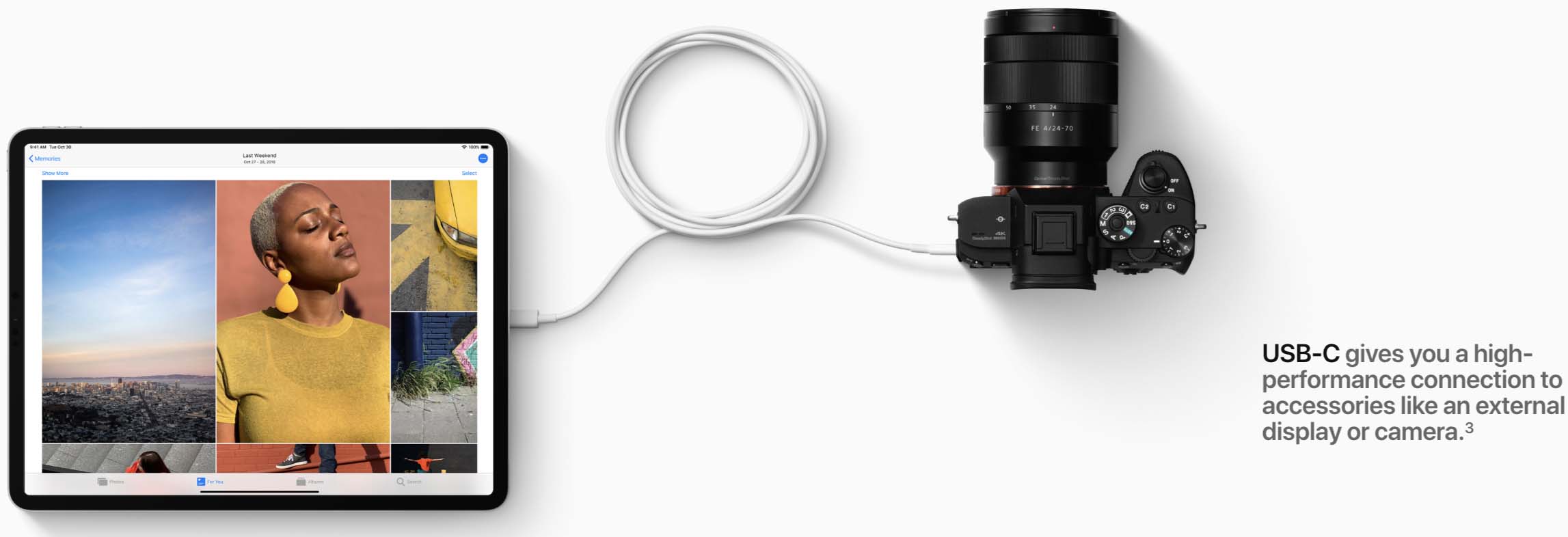
  • USB-C for charging/transferring/displaying photos
  • It does video but it’s photographer-centric
  • The bright yellow markings are from their cinematography background and helps with visibility, but it doesn’t glow
  • 512GB of memory in camera

Be sure to follow us on FacebookTwitterInstagramYoutube

Posted in 3rd Party Cameras, Zeiss ZX1| Tagged , | Leave a comment

Zeiss ZX1 vs Sony RX1RII vs Leica Q vs Fujifilm X100F

CameraSize.com and apotelyt added the new Zeiss ZX1 to their comparison tool and it’s a very large camera. Apotelyt has Front/Top/Back view, while camera size only has front and back. I think camerasize.com is a little more accurate with their sizing, but since both have their comparison tools ready I decided to post both together.

Sony RX1II:  B&H Photo / Amazon / Adorama
Fujifilm X100F:
 B&H Photo / Amazon / Adorama
Leica Q Typ 116: B&H Photo / Adorama / Amazon

Posted in Sony RX1R II| Tagged , , , , , , , , , | Leave a comment

Zeiss ZX1 Interface First Look


The Sony Zeiss ZX1 is the most exciting camera coming out of Sony engineering this year and DC.Watch gives us our first look at its interface from the Zeiss press conference. The inclusion of Adobe Photoshop CC on camera is a first and it pairs with Adobe Creative Cloud to streamline your workflow. While I think this is a great innovation I’m curious about how deep the editing tools will get and also I am sure we will have to have an Adobe Creative Cloud subscription with lots of cloud storage to really make the feature shine. Hopefully, Adobe’s cloud prices get a little better before the launch of the Zeiss ZX1.

Be sure to follow us on FacebookTwitterInstagramYoutube

via DC.Watch

Posted in Zeiss ZX1| Tagged , , , , | Leave a comment

New Reflex 40mm f/1.8, 75mm f/1.8, and 24mm f/1.8 Lenses


Reflex is releasing some new lenses for E-mount and photographyblog has some photos of them. The Press release for the Reflex 40mm f/1.8, 75mm f/1.8, and 24mm f/1.8 lenses is below:

Ahead of the anticipated release of the Reflex model I. later this year and in a Photokina 2018 preview special, we are proud to present to its audience, the first in a line up of three full frame lenses; The Reflex 40mm f/1.8 comes ahead of a 75mm f/1.8 and a 24mm f/1.8, completing a series of large aperture primes.

The Reflex I accompanying lens series have been optimized for both SLR and mirrorless photography with a compact form factor, carrying a double gauss lens design that signs for an organic look and smooth bokeh, making it a light and ideal daily shooter for both analog and digital photography. Furthermore, it features a clicked/step-less aperture ring for videography and cine adaptation and a large focus-ring rotation angle which enables for highly accurate focusing.

While being presented at Photokina in a native Reflex AR-i, Sony E and Canon EF mount, mirrorless versions will also become available in Nikon Z, Canon RF and Leica/Lumix L mount or to Fuji X and Micro 4/3 via adaptors with the EF version. The lens will be launched on Kickstarter mid November and will ship January 2019.

Anticipated retail price will be under $400.

Posted in 3rd Party Lens| Tagged , , , | Leave a comment