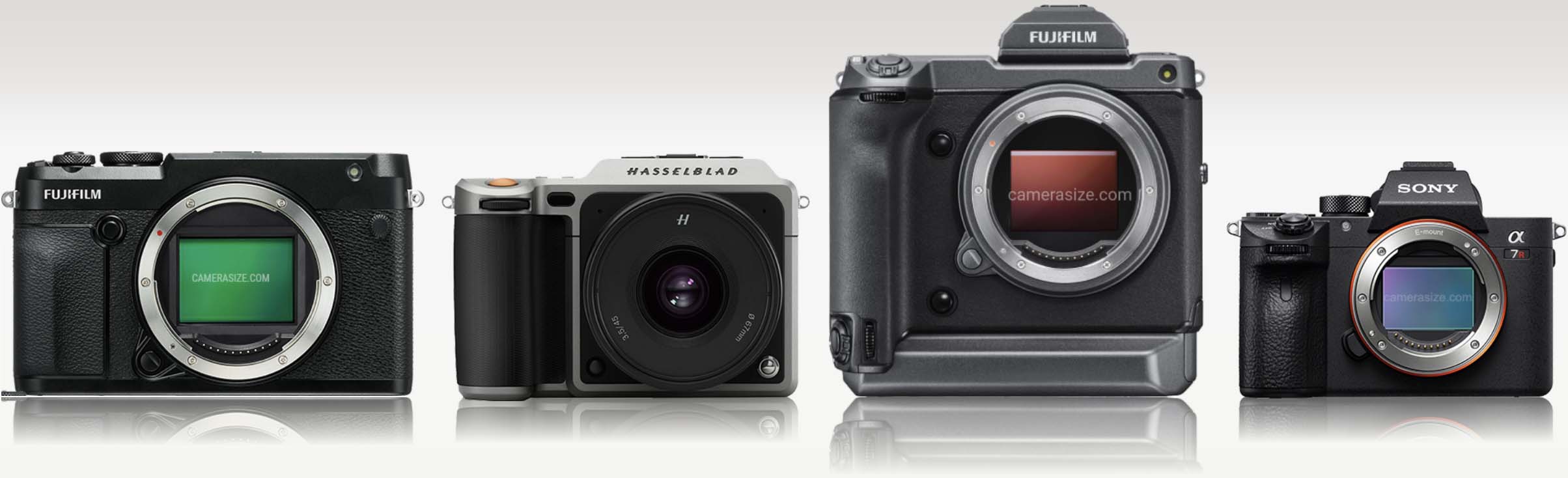
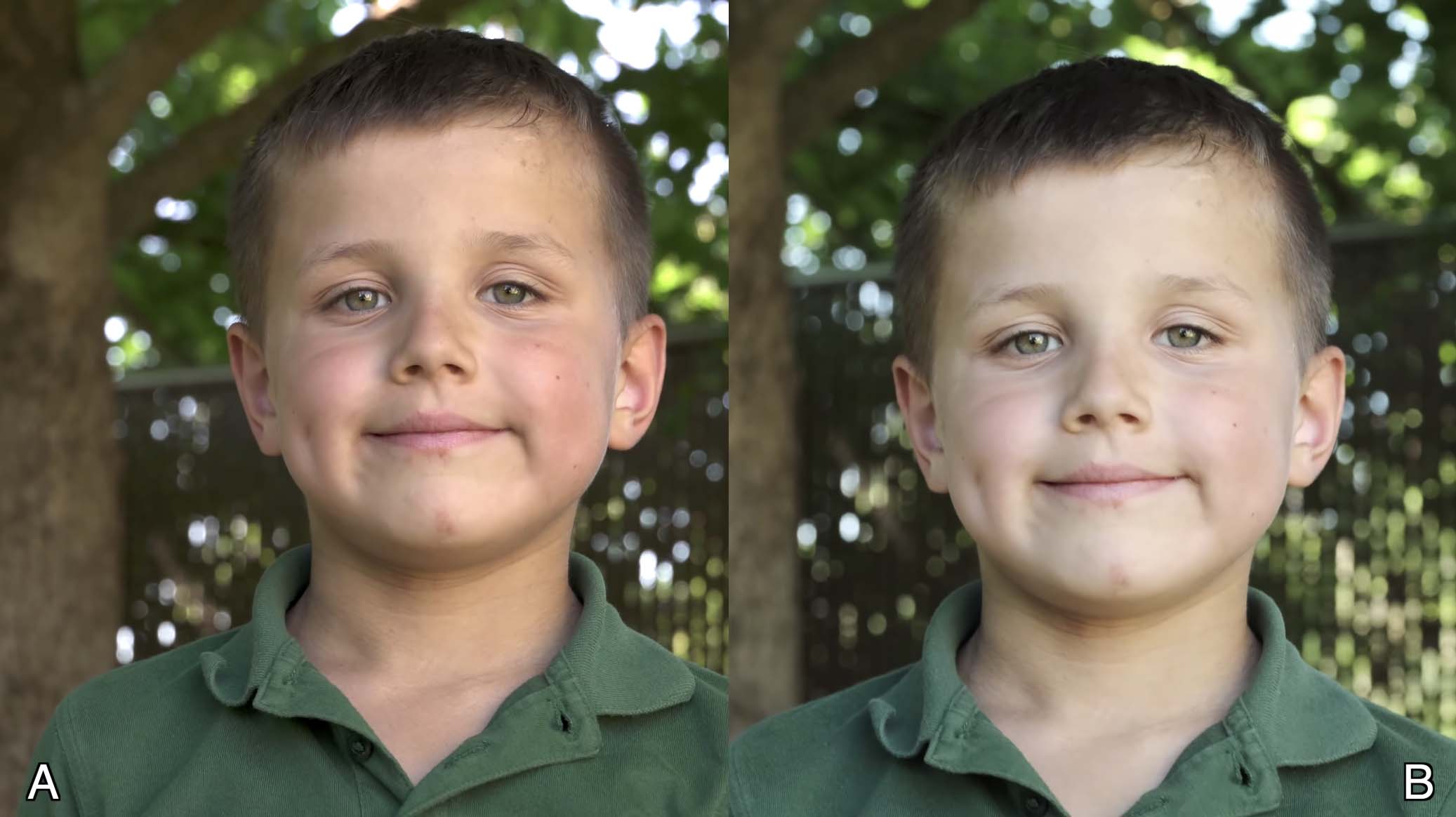
I personally own the GFX50S and will be getting the GFX100, but I often left my GFX50S home and used my Sony a7RIII when I wanted to travel lighter or thought a zoom might be useful. Medium format zooms are great, but there aren’t many and they often have apertures that that just will not work for me without compromising image quality, which kind fo defeatest the purpose of the camera.
Sony is well positioned to fight off the Hasselblad X1D II 50C and Fujifilm GFX50R, but I think the GFX50S and GFX100 will remain challenging due to their unique advantages. I am pretty sure Sony/Canon/Nikon will go 44x33mm in the future since the 35mm market is over saturated, but it’s hard to tell when prices will come down enough for them to make the jump.
The world of professional photography is shrinking and one way to combat this might be by producing increasinlgy high image quality that a camera phone will never be able to reproduce. This will require larger sensors in my opinion and we have already seen this transition begin. Fujifilm is promising some staggering performance with their GFX100 and if it lives up to the hype cameras like the Sony a7RIII might suffer.
The transition to 44 x 33mm will likely be a quick one for Canon and Nikon since their mount should be big enough for a larger than 35mm sensor, but Sony will need a new mount since they maxed out the E-Mount when they went from APS-C to Full Frame. Sony had a winning strategy, but I think Canon and Nikon will use the same strategy against Sony in the near future.
Following the revolutionary introduction of the world’s first mirrorless medium format digital camera, the X1D-50c, Hasselblad introduces new additions to its product portfolio that bring the joy of medium format photography to image makers with the capabilities to support their creative endeavours. This includes the evolved X1D II 50C camera, the eagerly awaited XCD 3,5-4,5/35-75 Zoom Lens and Phocus Mobile 2. In addition, Hasselblad reveals the development details of the upcoming CFV II 50C digital back and 907X camera body. Hasselblad’s newest offerings yet again expand the potential of medium format photography with modularity and flexibility, all while offering the brand’s renowned, stunning image quality.
X1D II 50C – AN EVOLVED MEDIUM FORMAT PHOTOGRAPHY EXPERIENCE
In the pursuit to continue the journey of taking medium format outside of the studio, Hasselblad is pleased to announce the next installment of the X System – the X1D II 50C Mirrorless Medium Format Digital Camera. Dedicated to optimising the X System for a wider audience of creatives, Hasselblad has listened to user feedback and improved upon the first generation with enhanced electronics for a quicker and more intuitive medium format experience.
Continuing in the legacy of being the most portable and lightweight digital medium format camera, the X1D II 50C lets you take the power of medium format in a footprint smaller than most full frame DSLRs in a beautifully designed, compact package. Its large, high resolution 50-megapixel CMOS sensor (43.8 x 32.9 mm) is 1.7 times larger than 35mm full format sensors, packing in huge pixels (5.3 x 5.3 μm) for capturing images with superb tonality. With outstanding colour depth and an impressive dynamic range of 14 stops, which allows for capturing immense details in both shadows and highlights, the photographer is left with plenty of room for adjustment in post-processing. With Hasselblad Natural Colour Solution (HNCS) technology integrated into the camera’s system, exceptional, true-to-life tones are delivered that match what the human eye sees. Building upon the award-winning first generation, the X1D II 50C blends form and function with minimalistic, Scandinavian design aesthetics with a graphite grey exterior and a smooth handling experience with its ergonomic grip. The new X1D II 50C continues to provide creatives with incredible Hasselblad image quality, with 16-bit RAW images and now full resolution JPEGs, in a compact, lightweight design.
Developing upon the first generation of the X System, the X1D II 50C’s upgraded electronic platform includes a higher resolution 3.6-inch 2.36-million-dot touch display, which is physically the largest LCD display currently available on a digital medium format camera. Additionally, the X1D II 50C features a higher resolution enhanced OLED electronic viewfinder (EVF) with 3.69-million dots and a high magnification of 0.87x, letting you see the bigger picture. The much higher resolution of the rear display screen (1024×768) gives a more vivid, true to life image viewing experience.
The X1D II 50C’s live view features a faster refresh rate, reduced shutter lag and black out time between frames, an improved continuous capture rate, and a startup time cut almost in half from the first generation. Building upon the highly-intuitive Hasselblad User Interface (HUI) of the previous model, further refinements have been made to the X1D II 50C to improve the camera’s handling experience, including the ability to access the menu system when looking in the EVF, giving greater usability in the sunniest conditions.
Enabling an even more portable medium format workflow, Hasselblad’s post production solutions now include the new Phocus Mobile 2. Connected via USB-C and Wi-Fi, photographers can transfer RAW and full quality JPEG files directly from the X1D II 50C and edit RAW images on their iPad Pro or iPad Air (2019) while out on the field.
THE NEW XCD 3,5-4,5/35-75 – PRIME LENS PERFORMANCE IN A COMPACT ZOOM
The ninth addition to the X System lens range is the eagerly awaited XCD 3,5-4,5/35-75 Zoom Lens. Delivering the same superb image quality from edge-to-edge as the XCD prime lenses, this extremely high performance, compact mid-range zoom covers moderate wide angle to short telephoto focal lengths. Its internal focusing keeps the lens’ dimensions constant, delivers quick autofocus and additionally keeps the overall weight down. Ideal for shooting anything from wide angle landscapes to portrait images, this lens is perfect for photographers who are looking to keep the amount of equipment they carry when travelling to a minimum but don’t want to compromise on image quality. “This really is the best lens Hasselblad has developed – its performance is extremely high, competing with our prime lenses. I can even go as far to say that it’s probably the best zoom lens currently available on the market,” says Per Nordlund, Hasselblad Lead Optical Designer. Like the rest of the XCD lens range, the XCD 35-75 features an integral central lens shutter, offering exposure times from 68 minutes to 1/2000s with full flash synchronisation throughout.
PHOCUS MOBILE 2 TAKES IMAGE PROCESSING WORKFLOW TO A NEW PORTABLE LEVEL
Expanding the possibilities of the Hasselblad workflow, Phocus Mobile 2 takes the image editing process to a new, portable level. Compatible with the X1D II 50C via either USB-C or Wi-Fi, this application is currently supported on iPad Pro and iPad Air (2019) models, enabling the traveling photographer to have a quicker, more mobile workflow. With Phocus Mobile 2, users can import, edit and rate RAW images and import and rate full quality JPEG images directly on their portable device. In addition, Phocus Mobile 2 supports full quality image export, tethered shooting and direct camera control.
THE CFV II 50C AND 907X CONNECT HASSELBLAD’S PHOTOGRAPHIC HISTORY INTO ONE SYSTEM
Hasselblad proudly announces the development of the modernised CFV II 50C digital back and the brand new 907X camera body, which together will connect Hasselblad’s photographic history into one system.
The CFV II 50C digital back, which will have an outstanding medium format 50-megapixel CMOS sensor (43.8 x 32.9 mm), will enable use with most V System cameras made from 1957 and onwards in addition to third party technical or view cameras. Improving upon the user experience of the previous generations, the CFV II 50C will feature a brilliant tilt screen with full touch support and Hasselblad’s renowned user interface for settings, image review, and menu navigation. Users of previous CFV digital backs will appreciate a new fully-integrated battery, the same used on the X System, which will reduce overall size and with the option to recharge in-camera via the USB-C port. Combining its iconic aesthetics with modern technology, the CFV II 50C gives a nod to Hasselblad’s history combined with the brand’s world-renowned image quality.
Coupling the CFV II 50C with Hasselblad’s smallest medium format camera body ever, the 907X, creates a highly compact package. This combination will offer a truly distinct photographic experience, including the classic waist-level shooting style of the V System enabled by the CFV II 50C’s tilt screen. With the 907X, the photographer will gain access to all of the high-quality X System Lenses in addition to a vast range of Hasselblad optics via adapters, including the H System, V System, and XPan Lenses. In addition, the 907X will enable compatibility with a wide range of third-party adapters and lenses. Planned accessories to beautifully complement the combination include the 907X Control Grip and 907X External Optical Viewfinder.
HASSELBLAD CONTINUES ITS CELEBRATION OF MEDIUM FORMAT ARTISTRY IN JULY 2019
July 2019 marks the 50th anniversary of the first humans landing on the Moon – not only a historic milestone for NASA, but for Hasselblad and photographic history. As the camera selected and built to document the legendary journey, Hasselblad will celebrate this remarkable moment that helped launch the Swedish photography brand to another level. More information will come soon on this exciting commemoration.
The X1D II 50C has an MSRP of € 5000 / $ 5750 / £ 4500 excl. VAT. Delivery in July 2019. Available to order immediately.
The XCD 3,5-4,5/35-75 Zoom Lens has an MSRP of € 4500 / $ 5175 / £ 4050 excl. VAT. Estimated delivery in October 2019. Ordering information will be released shortly before.
Phocus Mobile 2 can be downloaded free of charge by Hasselblad users starting in July 2019.
The CFV II 50C and 907X product information details, including pricing and availability, will be announced later in the year.