Sony Develops World’s First Stacked CMOS Image Sensor Technology


Sony Develops World’s First*1 Stacked CMOS Image Sensor Technology with 2-Layer Transistor Pixel Widens Dynamic Range and Reduces Noise by Approximately Doubling*2 Saturation Signal Level*3

Sony Semiconductor Solutions Corporation

*1: As of announcement on December 16, 2021.

*2: Based on comparison, on a one square μm equivalent basis, between existing image sensor and the new technology applied to Sony’s back-illuminated CMOS image sensor; as of announcement on December 16, 2021.

*3: A single pixel’s maximum electron storage capacity.

Sony Semiconductor Solutions Corporation (“Sony”) has succeeded in developing the world’s first*1 stacked CMOS image sensor technology with 2-Layer Transistor Pixel. Whereas conventional CMOS image sensors’ photodiodes and pixel transistors occupy the same substrate, Sony’s new technology separates photodiodes and pixel transistors on different substrate layers. This new architecture approximately doubles*2 saturation signal level*3 relative to conventional image sensors, widens dynamic range and reduces noise, thereby substantially improving imaging properties. The new technology’s pixel structure will enable pixels to maintain or improve their existing properties at not only current but also smaller pixel sizes.

Sony announced this breakthrough at the IEEE International Electron Devices Meeting that started on Saturday, December 11, 2021.

■ Stacked CMOS image sensor architectures
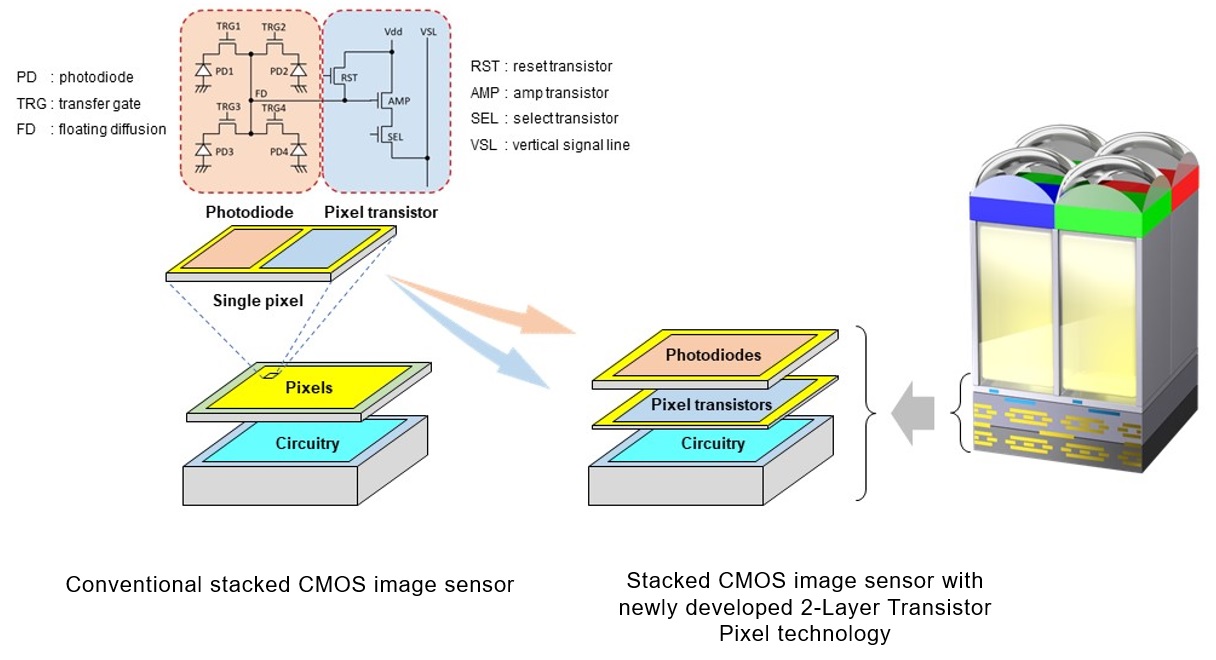

A stacked CMOS image sensor adopts a stacked structure consisting of a pixel chip made up of back-illuminated pixels stacked atop a logic chip where signal processing circuits are formed. Within the pixel chip, photodiodes for converting light to electrical signals, and pixel transistors for controlling the signals are situated alongside each other on the same layer. Increasing saturation signal level within form-factor constraints plays an important role in realizing high image quality with wide dynamic range.

Sony’s new architecture is an advancement in stacked CMOS image sensor technology. Using its proprietary stacking technology, Sony packaged the photodiodes and pixel transistors on separate substrates stacked one atop the other.
In conventional stacked CMOS image sensors, by contrast, the photodiodes and pixel transistors sit alongside each other on the same substrate. The new stacking technology enables adoption of architectures that allow the photodiode and pixel transistor layers to each be optimized, thereby approximately doubling saturation signal level relative to conventional image sensors and, in turn, widening dynamic range.

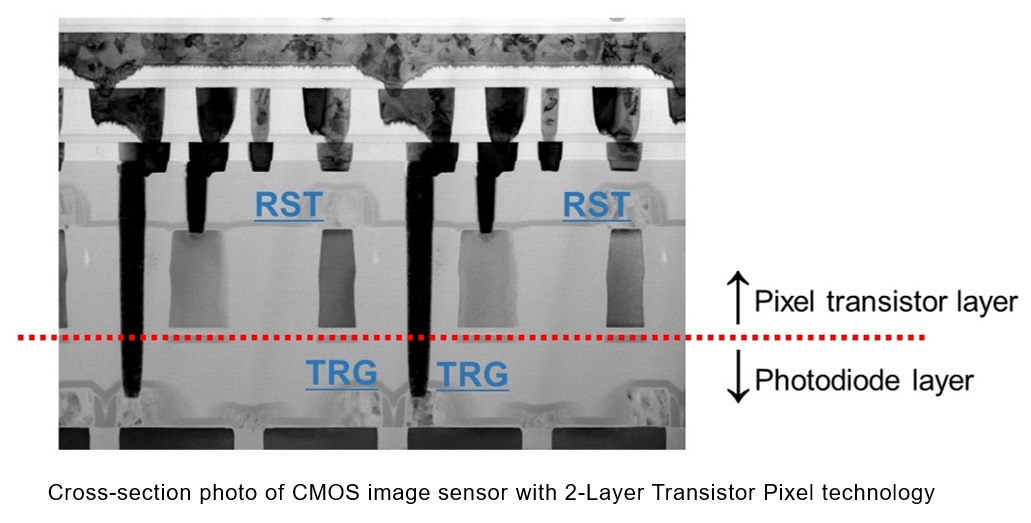
Additionally, because pixel transistors other than transfer gates (TRG), including reset transistors (RST), select transistors (SEL) and amp transistors (AMP), occupy a photodiode-free layer, the amp transistors can be increased in size. By increasing amp transistor size, Sony succeeded in substantially reducing the noise to which nighttime and other dark-location images are prone.

The widened dynamic range and noise reduction available from this new technology will prevent underexposure and overexposure in settings with a combination of bright and dim illumination (e.g., backlit settings) and enable high-quality, low-noise images even in low-light (e.g., indoor, nighttime) settings.

Sony will contribute to the realization of increasingly high-quality imaging such as smartphone photographs with its 2-Layer Transistor Pixel technology.

Posted in Press releases| Tagged | Leave a comment

Deal Zone Save up to $410 on SanDisk


B&H Photo currently has some great savings on Sandisk storage ranging from SD cards to SSD. The sale ends tomorrow so take advantage of the discounts while you can.

Posted in Deals| Tagged | Leave a comment

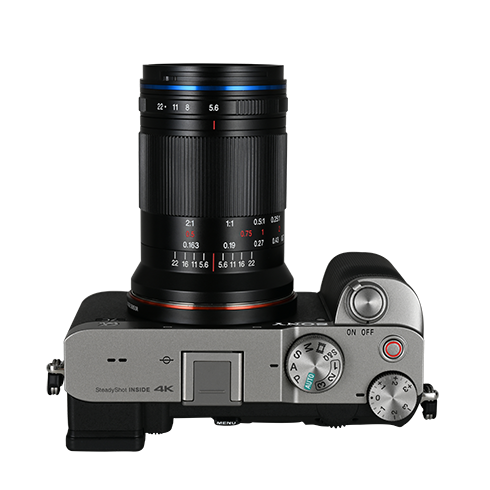
Optical Limits: Laowa 85mm f/5.6 2x Ultra Macro APO Review


Laowa has made a lot of great lenses lately along with some niche lenses. The Laowa 85mm macro seems to fall into the niche category with its strengths being it is a 2:1 macro lens that is compact. You can read Optical limits full review here or read the summary excerpt:

The Laowa 85mm f/5.6 2x Ultra Marco APO is a good lens. It delivers a predictable performance across its aperture range. At medium aperture settings, it’s pretty sharp without being truly outstanding. Diffraction takes its usual toll at small apertures and it’s advisable to avoid f/22 at least. That’s also a good idea because of CAs. They are very low up to f/11 but increase beyond – albeit not to a worrisome degree. Image distortions are basically absent as they should be with a macro lens. The quality of the bokeh is a bit of a mixed back. Out-of-focus highlights aren’t ideal whereas the out-of-focus transition zone is rendered nicely.

The build quality is perfectly fine with the usual caveats of an all-manual lens. The lens body is made of metal including the lens hood and we especially like the inner focusing system. On the downside, there’s still no electronic coupling thus you’d have to live without AF, EXIF data, and no camera-controlled. This is not a drama for a macro lens but it’s hindering Laowa from entering the mainstream market.

The question of the day is probably where to find the niche for this kind of lens. Its primary value proposition is the minimal size and low weight. Some may also appreciate the ability to focus down to a maximum magnification of 2:1. If these are your priorities, you may accept the lack of speed and the all-manual nature. At almost $500USD, we wouldn’t call it a steal though.

Follow SonyAddict on FacebookTwitterInstagram, and YouTube

Plus our owners’ groups
Sony a1 Owners Group
Sony a9 Owners Group
Sony a7 Owners Group

Laowa 85mm f/5.6 2x Ultra Macro APO:
VenusOptics / B&H Photo / Amazon

Posted in 3rd Party Lens| Tagged , , , , , | Leave a comment

Save $948 on Atomos Ninja V+ Switch & Stream Kit and Other Atomos Deals


B&H Photo currently has the Atomos Ninja V+ Switch & Stream kit discounted $948 along with various other Atomos Bundles for up to $750 off other bundles. Atomos has been in our Sunday savings post for the past few weeks now, but these are the biggest savings yet.

Posted in Accessories, Deals| Tagged , , | Leave a comment

New Viltrox 35mm f/1.8 Full Frame


Viltrox just full announced its new Viltrox 35mm f/1.8 Full Frame lens and you can get on Amazon.

  • Full-frame Lens: The Viltrox 35mm F1.8 wide-angle lens is designed for full-frame format Sony E-mount mirrorless cameras, and when used with APS-C format cameras, it has the equivalent perspective of a 52.5mm lens.
  • Large Aperture: Bright f/1.8 maximum aperture suits working in low-light conditions and also affords greater control over the depth of field. The Nine-blade diaphragm contributes to a pleasing bokeh quality. Integrated manual aperture ring for tactile exposure control; this ring also features an ‘A’ position for automated, camera-based aperture selection.
  • Excellent Optical Design: The optical design incorporates two extra-low dispersion elements and two aspherical elements, which combine to suppress a variety of aberrations and produce high sharpness, clarity, and colour accuracy, and two high refractive index elements are included to suppress a variety of aberrations and distortion.
  • STM Stepping Motor: STM stepping motor enables quick, quiet, and precise autofocus performance along with full-time manual focus override. Additionally, an internal focusing design maintains the overall lens length during use for improved handling and quicker response.
  • HD Nano Multilayer Coating: In order to solve the dispersion problem caused by a large aperture, this lens adopts a high-definition Nano multilayer coating to correct the dispersion difference and eliminate ghosting and flare.
Posted in 3rd Party Lens| Tagged , , | Leave a comment

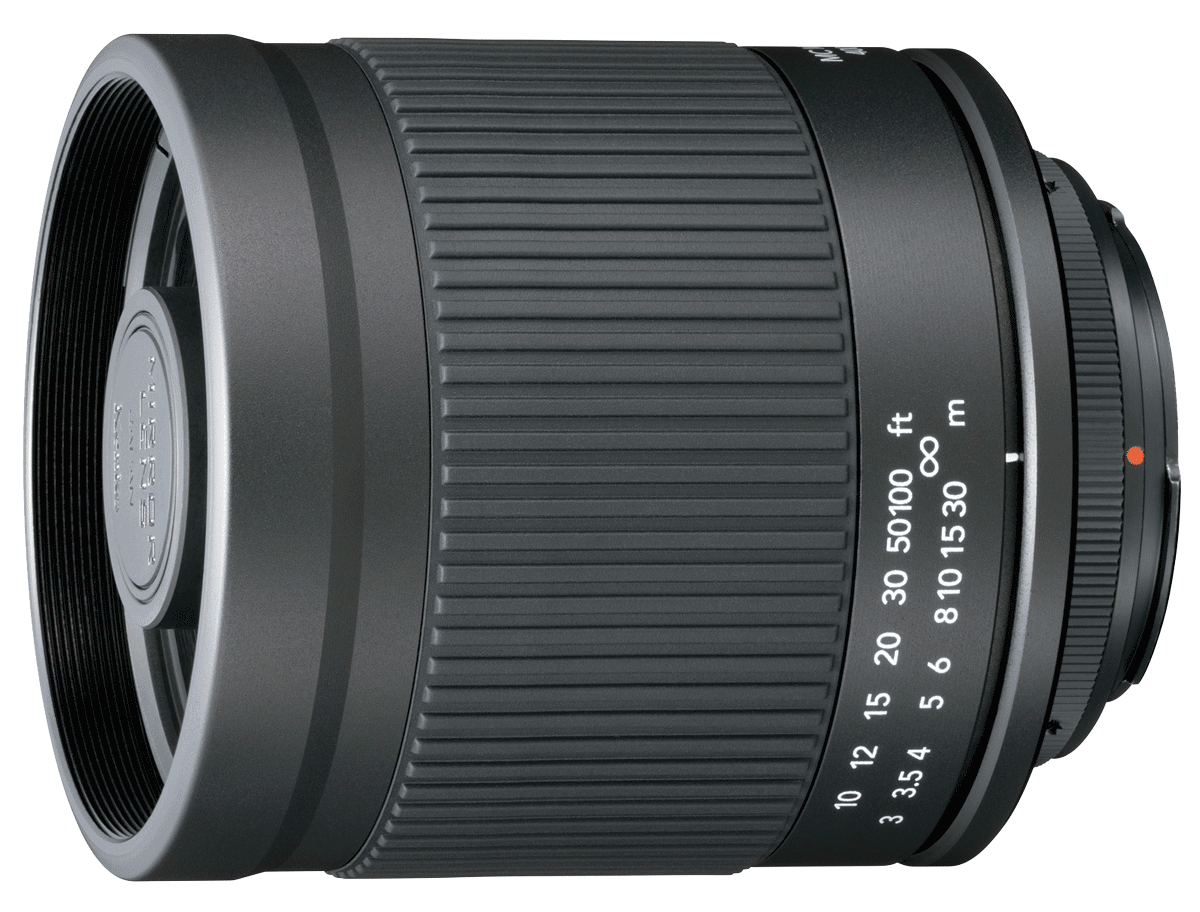
Kenko 400mm f/8 II Coming Soon


Nokishita has spotted a new mirror lens from Kento listed as the Kenko 400mm f/8 IIS. Mirror lens are a lot of fun and generally come with a T-mount so you can adapt them to any system, but this one is designed for mirrorless like the new Tokina 400mm f/8 that is currently on sale for a great price on Amazon. Mirror lenses are great for getting a lot of sharp reach in a small size, but the bokeh can be offensive sometimes.

Mirror lens designs are quite simple and hard to mess up so just about any mirror lens will do if you’re just getting into them. The Tokina that I just bought does have something new and interesting to me though… It works as a 1:2.5 macro lens. No news about if the Kenko does the same, but it very well might. Below is the translated Nokishita text.

Pentax ” K-3 Mark III 20-40mm Lens Kit (Black / Silver)” and Kenko “Mirror Lens 400mm F8 IIS (Nikon F / Nikon Z / Canon EF / Canon EF-M / Sony E / Pentax K / Fujifilm X”・ Microforcers) ”has been added to some domestic retailers.

via FujiAddict, Nokishita

Posted in 3rd Party Lens| Leave a comment