Sony Semiconductor Solutions to Release LOFIC-Equipped CMOS Image Sensor for Mobile Applications with 100 dB


Sony Semiconductor Solutions to Release LOFIC-Equipped CMOS Image Sensor for Mobile Applications with 100 dB Dynamic Range and Low Power Consumption
Delivering power saving, high-image quality 4K shooting and improved night view and outdoor imaging performance

Sony Semiconductor Solutions Corporation (Sony) today announced the upcoming release of the LYTIA L910, an approximately 50-effective megapixel*1 image sensor for mobile applications delivering 100 dB high dynamic range imaging with low power consumption.

This is the first product in the LYTIA lineup with the LOFIC*2 structure. It also features the new HDR technology and logic circuit technology to reduce random noise in dark areas of images. These technologies enable high-quality imaging by reducing highlight blowout in bright areas and noise in dark areas, compared to conventional products. Furthermore, it can offer HDR video recording at 4K, 60 fps, which has become more popular recently, while maintaining low power consumption with optimized circuit design. With these improvements, the new sensor provides high-quality imaging that looks much like what is seen by the human eye and clear capturing of both highlights and shadows in high-contrast scenes, such as night views with bright LED lights. It brings new value to the shooting experience on mobile cameras.

*1: Based on the image sensor effective pixel specification method.
*2: Lateral Overflow Integration Capacitor (LOFIC).

LYTIA L910 CMOS image sensor

Model nameMass-production shipment date

LYTIA L910 1/1.28-type (12.49 mm diagonal)
50-effective-megapixel*1 stacked CMOS image sensor

Summer 2026

In recent years, the need for camera functionality that can provide stable, high-quality imaging in various environments continues to grow along with the popularity of video production and live streaming. Consequently, image sensors require expanded dynamic range and improved power efficiency.

The new sensor combines the expanded saturation capacity enabled by the LOFIC structure with the new HDR and circuit technology. It achieves a dynamic range of 100 dB with a single exposure, enabling imaging with rich gradations from highlights to shadows and minimal noise. Compared to multi-exposure HDR technologies, this design suppresses motion blur and flicker when shooting moving subjects, since the synthesizing process is not needed. Also, Sony’s proprietary circuit design reduces power consumption, enabling high-quality video recording at 4K, 60 fps even when shooting in HDR.

Main Features
The new HDR and circuit technologies deliver 100 dB high dynamic range imaging in a single exposure

The new sensor equips the LOFIC structure, which can store overflow charge from the photodiode and expand the saturation capacity compared to Sony’s conventional product.*3 It also employs Triple Conversion Gain-HDR (TCG-HDR) technology, which reads out the charge obtained from a single exposure at three different conversion gains. This makes it possible to reduce highlight blowouts in bright areas and noise from dark areas to mid-tones to render high-quality imaging from bright areas to dark areas. Also, Ultra High Conversion Gain (UHCG) circuits technology enhances charge to voltage conversion efficiency. It reduces random noise by approximately 30% compared to Sony’s conventional product,*3 improving image quality in low-light conditions. These technologies achieve 100 dB high dynamic range images with a single exposure, suppressing noise in low-light conditions and enabling imaging with smooth gradations in high-contrast scenes. Single exposures also reduce moving subject blur, and the extended exposure time improves the image signal-to-noise ratio (SNR)*4 and suppresses light source flickering.

*3: Compared with the LYTIA 828 1/1.28-type (12.49 mm diagonal), approximately 50-effective megapixel stacked CMOS image sensor.
*4: A unit that expresses the ratio of signal to noise.

The optimized circuit design delivers low-power 4K video recording while maintaining high dynamic range
Sony’s proprietary circuit design and advanced processes reduce the time required for analog-to-digital signal conversion, thereby lowering sensor power consumption. This leads to lower battery consumption for smartphones and enables high-quality 4K video recording at 60 fps while maintaining a high dynamic range. It also enables users to preview images in HDR quality on their smartphone screens. By capturing images and video as they appear, the sensor contributes to improved shooting experiences.

Key Specifications

Model name

LYTIA L910

Image size

1/1.28-type (diagonal 12.49 mm)

Effective pixels

Approx. 50 megapixels

Unit cell size

1.22 μm (H) ×1.22 μm (V)

Color filter

Quad Bayer Coding

<


Frame rate (at full-pixel AF)
50 Megapixels (4:3)

30 fps

12.5 Megapixels (4:3)

120 fps
60 fps (DCG-HDR)
60 fps (TCG-HDR w/LOFIC)

4K2K (16:9)

60 fps (2×2 Bin, DCG-HDR)
60 fps (2×2 Bin, TCG-HDR w/LOFIC)


Analog

2.8 v/1.8 v

Digital

0.81 v

Interface

1.8 v or 1.2 v

Output interface

MIPI® C-PHY 2/3 trio, Max. 6.0 Gsps/trio
MIPI D-PHY 2/4 lane, Max. 2.5 Gbps/lane

For more information on LYTIA, Sony’s mobile image sensor brand, please visit the LYTIA brand site:https://www.sony-semicon.com/en/products/is/mobile/index.html

* LYTIA and the LYTIA logo are registered trademarks or trademarks of Sony Group Corporation. 
* All product and service names that appear in this press release are the trademarks or registered trademarks of their respective owners.

via Sony

Posted in Press releases| 2 Comments

New Brightin Star 14mm f/2.8


Brightin Star announced a new lens, the Brightin Star 14mm f/2.8, available from B&H Photo and Amazon.

  • Expansive 116° View: Capture landscapes, architecture, interiors, and starry skies in one frame, distortion-free.
  • Edge-to-Edge Sharpness: 13 elements in 9 groups with 2 ASPH, 5 high-refractive, and 3 ED lenses for perfect clarity from center to edge.
  • Flare-Free Nano Coating: Multi-layer Star Nano IMC coating ensures natural colors, reduced ghosting, and pinpoint stars for night photography.
  • Supports 82mm square ND/CPL filters and doubles as a lens hood
  • 10-blade aperture creates beautiful 10-point star effects
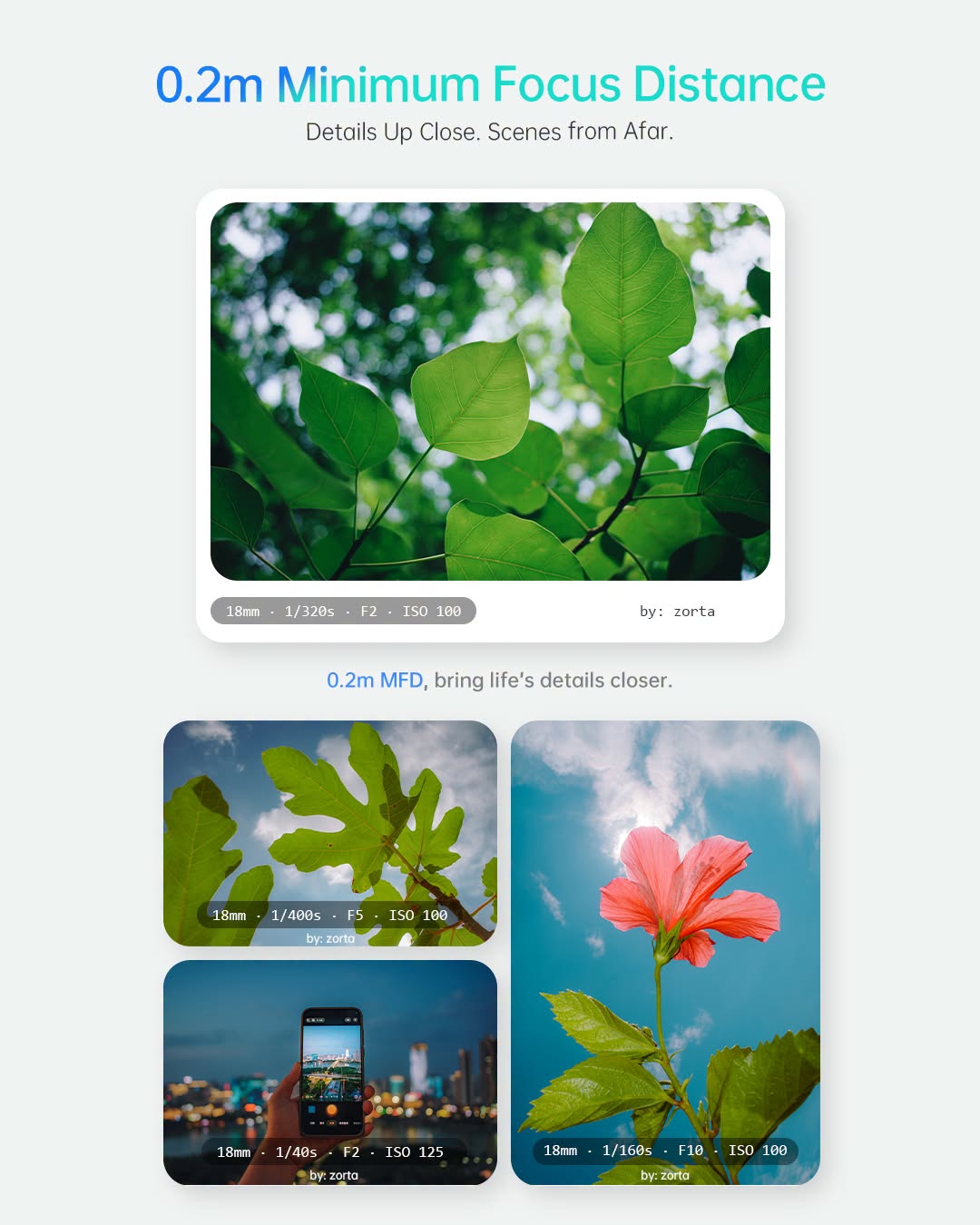
  • 0.2m minimum focus distance


Posted in 3rd Party Lens| Tagged , | 38 Comments

OL: Viltrox AF 90mm f/2.2 EVO Review – Extremely Sharp


Viltrox AF 90mm f/2.2 EVO: B&H Photo / Amazon

The Viltrox AF 90mm f/2.2 EVO was announced the other day,  and Optical Limits just published its full review of this extremely sharp, affordable 90mm, which you can read here or check out the pro/cons below:

Pros

  1. Great sharpness straight from f/2.2
  2. Superb value proposition
  3. Very good build quality

Cons

  1. No auto-correction profile (in X-mount)
  2. Aperture ring can’t be de-clicked (X-mount)

Follow SonyAddict on FacebookTwitterInstagram, and YouTube

Plus, our owners’ groups
Sony a1 Owners Group
Sony a9 Owners Group
Sony a7 Owners Group

Posted in 3rd Party Lens| Tagged , | 41 Comments

OL: Viltrox AF 75mm f/1.8 EVO Review – Ultra Sharp


Viltrox AF 75mm f/1.8 EVO:
 B&H Photo / Amazon

The Viltrox AF 75mm f/1.8 EVO was announced the other day, and Optical Limits just published its full review of this ultra-sharp, affordable 75mm, which out-resolves 24MP wide open. You can read here or check out the pro/cons below:

Pros

  1. Ultra-sharp
  2. Nice build quality
  3. Great value

Cons

  1. Native vignetting a bit high at f/1.8

Follow SonyAddict on FacebookTwitterInstagram, and YouTube

Plus, our owners’ groups
Sony a1 Owners Group
Sony a9 Owners Group
Sony a7 Owners Group

Posted in 3rd Party Lens| Tagged , | 11 Comments

Sony Registered a New Camera WW308784 (Likely a RX or APS-C Camera), Leaked Sensor Roadmap, and A Sony Event


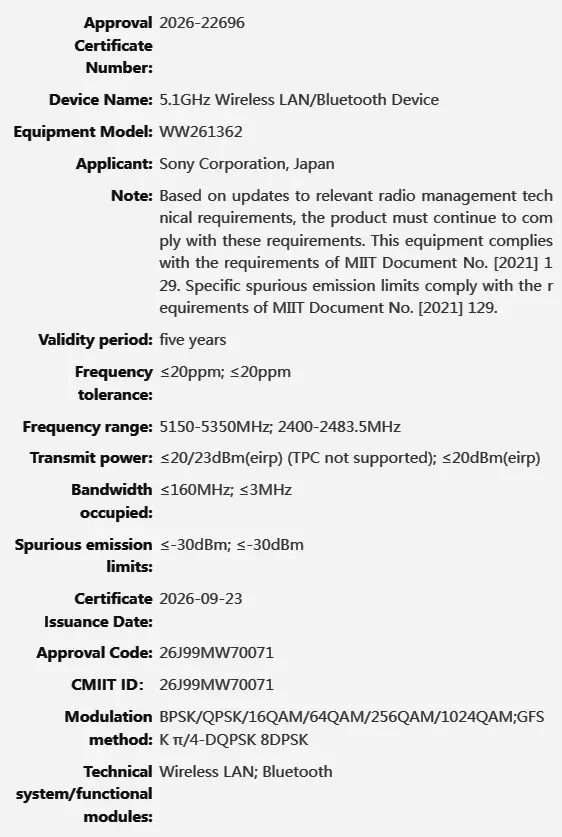
Sony registered a new digital camera with the Indonesian certification body POSTEL, but the entry was later removed. The new WW308784 will be made in China (not Thailand), and DCLife speculates it could be a new RX or APS-C model because it was registered as “Digital Camera” rather than “Interchangeable Lens Digital Camera.”

Here is a leaked Sony sensor roadmap from a few months ago – you can see what is expected in 2026 and 2027:

Somy Indonesia will hold an Alpha event on June 26-28, which is a weekend, so it is unlikely that they will announce a new product at the event:

The “Sony Alpha Event” scheduled for June 26–28 is the Alpha Festival 2026 hosted by Sony Indonesia, taking place at the Sports Hall in Agora Mall, Central Jakarta. It is a multi-day regional community and product showcase rather than a global broadcast.

via Photorumors

Posted in Patents| Tagged , , | 4 Comments

Schneider Kreuznach × LK Samyang AF 60-180mm f/2.8 FE Coming June 25th


The Schneider Kreuznach × LK Samyang AF 60-180mm f/2.8 FE lens is expected be be announced on June 25th. You can find specs and details below:


via Photorumors 1, 2

Posted in 3rd Party Lens| Tagged , , , , | 2 Comments