Some Interesting New Rumors: Medium Format, A7M, Canon, and a7RV


There are lots of questionable rumors out there atm in Sony land, but I recently received some interesting ones that I think might be worth sharing.

Here is something I can be a bit more definitive about: Sony will announce Medium format cameras in the summer. 2 of the. 150mp and 200mp. $7500 and $9999 respectively. Anything over 10k and its effectively pointless. Under 10k and they put Hasselblad and Phase One out of business.
The curved sensor patents we saw earlier would limit them to Prime lenses and extremely expensive ones at that…so expect flat regular medium format sensors like the 150mp and 200mp we’ve already seen patented.

Expect a bizarre name like A7M i and A7M ii.

Announcement may be a development announcement at the same time the A7r V.

Sony using the a7 monicker for a future medium format camera could be interesting for sure, but I’d like to think that Sony would use a more distinct name to differentiate the line. For example, Sony’s top-of-the-line APS-C camera falls within the a6xxx line of cameras and Sony also uses a5xxxx, while using a7 and a9 for full-frame. Maybe Just Sony Alpha Medium Format? There is also supposed to be an FE mount to medium format adapter in the works.

Shame 🤔 Sony 102mp A7r V in June and Canon 90mp or 120mp R5s/R5x in August.

It seems plausible that Sony and Canon would want to introduce 100MP Full Frame sensors as soon as possible to attract Fujifilm GFX owners/buyers, but I am curious to see how noise performance holds up in comparison. Also, Sony has been rumored to be going 100MP in its a7R line for a while now so someone is eventually going to be right about this, but I don’t think it became a serious possibility until well after the Fujifilm GFX was released.

I have written about the importance of megapixels before, but many were resistant to the idea due to the previous megapixel war where we saw cameras race from sub 1MP to 24MP relatively rapidly and sometimes at the expense of noise and high ISO performance, but now with the GFX camera companies can see that there is demand for high megapixel cameras. Further making the point the Fujifilm GFX100S has been sold out since its announcement and has only recently become easier to find, while the GFX50SII hasn’t been very hard to find since its fairly recent launch. So this very well might be the year that Sony decides to release a 100MP full-frame camera and its success, or failure, may dictate what happens with Sony Medium Format.

Follow SonyAddict on Facebook, Twitter, Instagram, and YouTube

Plus our owners’ groups
Sony a1 Owners Group
Sony a9 Owners Group
Sony a7 Owners Group

Posted in Uncategorized| Tagged , , , , , , , , , , , , , , , , , , , , , , , , , , , , , , , , , , , , , , , , , , , , , , , , , , , , , , , , , , , , , , , , , , , , | 1 Comment

First Tokina SZ 8mm f/2.8 E FISH-EYE Review

Tokina SZ 8mm F2.8 E FISH-EYE: Amazon

Christopher Frost posted his full review of the Tokina SZ 8mm f/2.8 E FISH-EYE after the announcement the other day. Below are excerpts from the above video.

  • Autofocus is rarely needed on this wide of a lens
  • Will launch for around $300
  • 180 Degree field of view
  • Can offer a lovely new challenge especially if it is your first
  • Not quite full-circle coverage for full-frame
  • Very light
  • No weather sealing
  • Aperture ring at the back of the lens and it is clickless
  • Manual focus ring at infinity is in focus as close at 3m
  • Bulbous front element
  • Removable hood which is useful on a full-frame camera
  • Very solid build quality
  • At f/2.8 great sharpness can contrast in the center out to the very edges
  • The very edges only slightly increase at f/11
  • Overall a sharp lens
  • Very little vignetting
  • A fair bit of color fringing which is normal for a fisheye
  • Not too hard of a central pinch at the middle
  • Similar to the Samyang 8mm fisheye
  • Can focus down to 10cm which is very close
  • Still sharp even close-ups
  • There is flaring and some chroma smearing in the dark
  • Sun stars at f/16 are ok
  • Bokah is only present when shooting up close but the quality is only ok
  • Good value for money and recommended if you want a fish eye lens

Follow SonyAddict on Facebook, Twitter, Instagram, and YouTube

Plus our owners’ groups
Sony a1 Owners Group
Sony a9 Owners Group
Sony a7 Owners Group

Posted in 3rd Party Lens| Tagged , , , , | 3 Comments

Tokina SZ 8mm F2.8 E FISH-EYE Announced

Tokina SZ 8mm F2.8 E FISH-EYE: Amazon

Tokina SZ 8mm F2.8 X FISH-EYE and SZ 8mm F2.8 E FISH-EYE worldwide sales date announcement
Kenko Tokina Co., Ltd. is proud to announce the sales release of the Tokina SZ 8mm F2.8 FISH-EYE lens for Fuji X and Sony E (APS-C) camera mounts. SZ series offering a range of exciting products with specific features and valuable advantages.


Sales will commence on March 15, 2022.

The Tokina SZ 8mm F2.8 FISH-EYE is a compact and lightweight fast, ultra-wide prime, manual focus, full-frame fisheye lens designed exclusively for APS-C sensor mirrorless cameras. The line-up includes models for Fuji X and Sony E APS-C size camera mounts. Emphasized perspective and unique distortion makes this lens attractive for both still photographers and videographers.

Thanks to a compact, lightweight design and manual focus the Tokina SZ 8mm F2.8 FISH-EYE MF can be appealing to young active content creators from the price perspective. The suggested genres are landscape, nightscape, interior, architecture, street snap and pet photography. An ultra wide angle of view, unique perspective effect and a compact design allows this lens to be used for creating viral images for Social Networks such as Instagram as well as Vlogging.

Highlighted Features

  • Lightweight (280g) and compact (overall length 52mm) construction.
  • Fast f/2.8 lens for compact APS-C sensor mirrorless cameras.
  • High quality built and sophisticated exterior design.
  • Clickless aperture ring for smooth operation in video shooting.
  • Minimum focus distance of 10cm to include close-up objects in front of a wide background.
  • Detachable bayonet type hood to use with full-frame mirrorless cameras for achieving circular fisheye effect.

Posted in 3rd Party Lens| Tagged , , , , | 3 Comments

Luminar Neo Has Been Officially Released


Pricing
This time, we have prepared something special for our customers. Now users can choose between a 1-year subscription and a lifetime license of Luminar Neo. Offer details are below:

1-year subscription
Luminar Neo 1 seat for $59
Luminar Neo 2 seats for $79

Lifetime license
Luminar Neo 1 seat for $79
Luminar Neo 2 seats for $99

Lifetime license offer for users who own Luminar or Aurora
Luminar Neo 1 seat for $59
Luminar Neo 2 seats for $69

Subscription includes
⚬ All future updates
⚬ All new feature add-ons
⚬ Workflow designed for creative phot editing
⚬ Unique AI tools to simplify repetitive tasks
⚬ Builtin library of Textures & Overlays
⚬ 30-day money back guarantee
⚬ 24/7 technical support

Lifetime license includes
⚬ Update with AI Masking and Portrait Background Removal
⚬ Performance and stability updates
⚬ Workflow designed for creative photo editing
⚬ Built-in library of Textures & Overlays
⚬ Unique AI tools to simplify repetitive tasks
⚬ Lifetime license
⚬ 30-day money back guarantee
⚬ 24/7 technical support

Press Release
NEW YORK, NY – February 17, 2022 — Skylum announces Luminar Neo, our newest AI-driven photo editor, is now shipping. Luminar Neo introduces several unique AI technologies to the market: RelightAI, Powerline Removal and Dust Spot Removal. These technologies significantly change the way photos are edited, allowing creative professionals to tell visual stories in new ways while making it easier to bring their unique ideas to life.

“There is a fine line between the photo you took and the photo you imagined. Often, small details make the difference. In Luminar Neo, we’ve built an editor to help you create the photo you imagined.” — Ivan Kutanin, Skylum CEO Read More »

Posted in Software| Tagged , , , | 1 Comment

Sony Electronics’ Is The No. 1 Mirrorless Camera Brand & No. 1 Mirrorless Lens Brand For 2021 In North America


SAN DIEGO, CA – February 16, 2022 – Sony Electronics Inc. – a worldwide leader in digital imaging– continues to lead the industry in bringing mirrorless technology to the world. Following a year of innovative product introductions such as the Alpha 1, Sony Electronics announced today that it was the number one mirrorless camera brand[ii] and full-frame mirrorless camera brand in 2021[iii].  This past year also marks the 8th consecutive year Sony has held the #1 position in full-frame mirrorless camerasi.  And lastly, Sony has announced it was the number one mirrorless lens brand in 2021[iv] as well.

The success of the lineup of full-frame cameras, including the Alpha 7S, Alpha 7R and Alpha 9 series, has been paramount to Sony’s strong sales numbers. These have been complemented by the popularity of the Alpha 7 III, which continued to be the No. 1 selling full-frame interchangeable lens camera line for the 4th year in a row[v]. For lenses, Sony’s full lineup of 65 different E-mount models highlighted by their flagship G Master™ series continues to drive industry growth.

Additionally, newer innovations such as the new Alpha 7 IV have started to set early sales records.  For the week of December 19-25, 2021, the Alpha 7 IV had the highest single-week sales of any mirrorless interchangeable lens camera line in the last four years[vi].

“We are always listening to our customers’ feedback, advancing our innovation and creating the best possible tools for all types of content creators,” said Yang Cheng, Vice President, Imaging Solutions, Sony Electronics Inc. “Finding new ways to empower our community is our top priority and we are honored that so many continue to choose Sony to tell their stories and bring their creative visions to life.”

A variety of additional stories and exciting new content shot with Sony products can be found at www.alphauniverse.com, Sony’s community site to educate, inspire and showcase work from fans and customers of the Sony Alpha brand.

[i] Source: Sony Internal Research, U.S., Detachable Lens Camera, Sensor Size: Full Frame, Mirrorless Detachable Lens, Annual 2014, Annual 2015, Annual 2016, Annual 2017, Annual 2018, Annual 2019, Annual 2020, Annual 2021.

[ii] Source: The NPD Group/Retail Tracking Service, U.S., Detachable Lens Camera, Mirrorless Detachable Lens, Based on Dollars, Annual 2021.

Source: The NPD Group/Retail Tracking Service, Canada, Detachable Lens Camera, Mirrorless Detachable Lens, Based on Dollars, Annual 2021.

[iii]Source: The NPD Group/Retail Tracking Service, U.S., Detachable Lens Camera, Sensor Size: Full Frame, Mirrorless Detachable Lens, Annual 2021.

Source: The NPD Group/Retail Tracking Service, Canada, Detachable Lens Camera, Sensor Size: Full Frame, Mirrorless Detachable Lens, Based on Dollars, Annual 2021.

[iv] Source: Sony Internal Research, U.S., Lenses Filters Adapters and Caps, Imaging Accessory Type: Prime Lens and Zoom Lens, Lens Mount Type: Canon EF-M, Canon RF, Sony E-Mount, Fujifilm G, Fujifilm X, Hasselblad, Leica, L-Mount, Nikon 1, Nikon Z, Leica M, Jan 2021-Dec. 2021.

[v] Source: The NPD Group/Retail Tracking Service, U.S., Detachable Lens Camera, Sensor Size: Full Frame, Camera Family, Based on Units, Annual 2021, Annual 2020, Annual 2019, Annual 2018.

[vi] Source: The NPD Group/Weekly Retail Tracking Service, U.S., Detachable Lens Camera, Digital Lens Type: Mirrorless Detachable Lens, Camera Family, Based on Dollars, Jan 2018-Dec 2021.

Posted in Press releases| 3 Comments

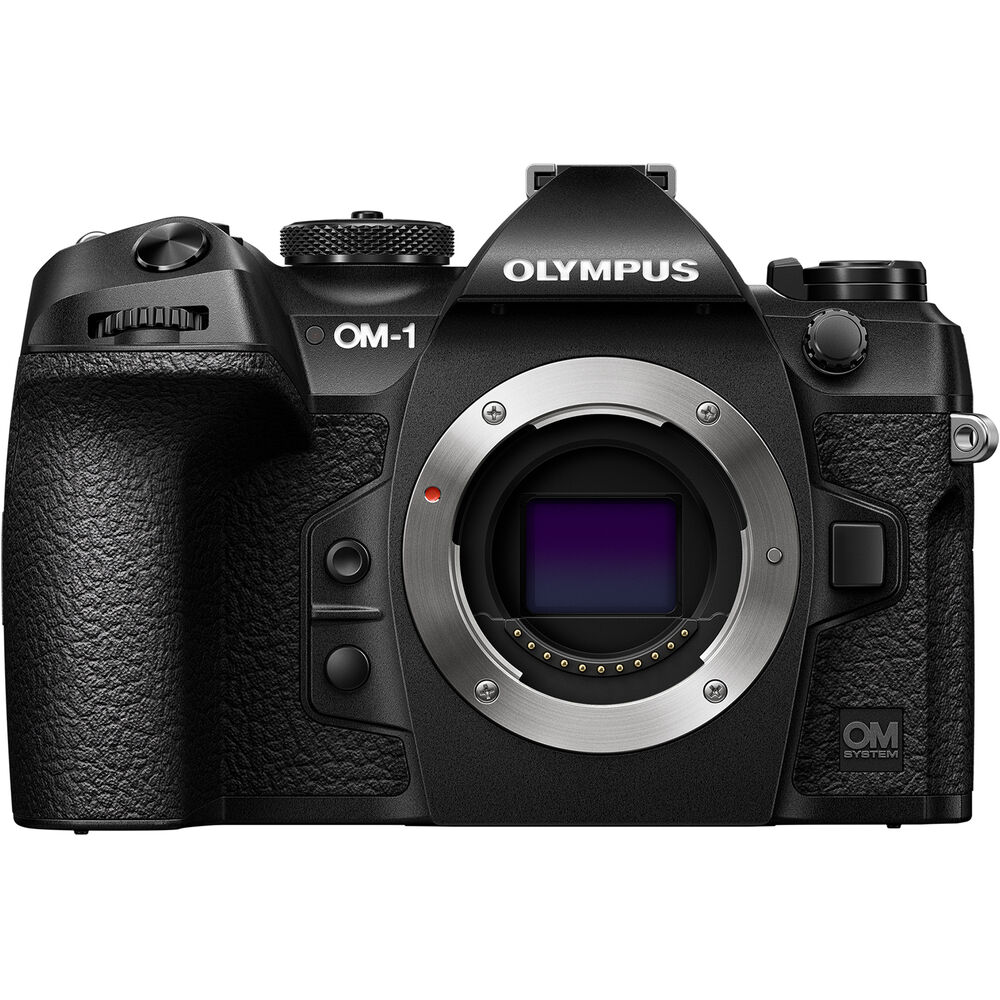
New Olympus OM-1 Uses Sony Quad Bayer m43 Sensor


OM-1: B&H Photo / Amazon / Adorama

Last night OM systems announced its latest Olympus camera the Olympus OM-1 with a pretty substantial price tag attached. I am curious to see how the Quad Bayer technology ends up working for noise performance and more, but I think it will be far more useful on APS-C and Full-Frame sensors. Below you can read a summary of what the technology has to offer.

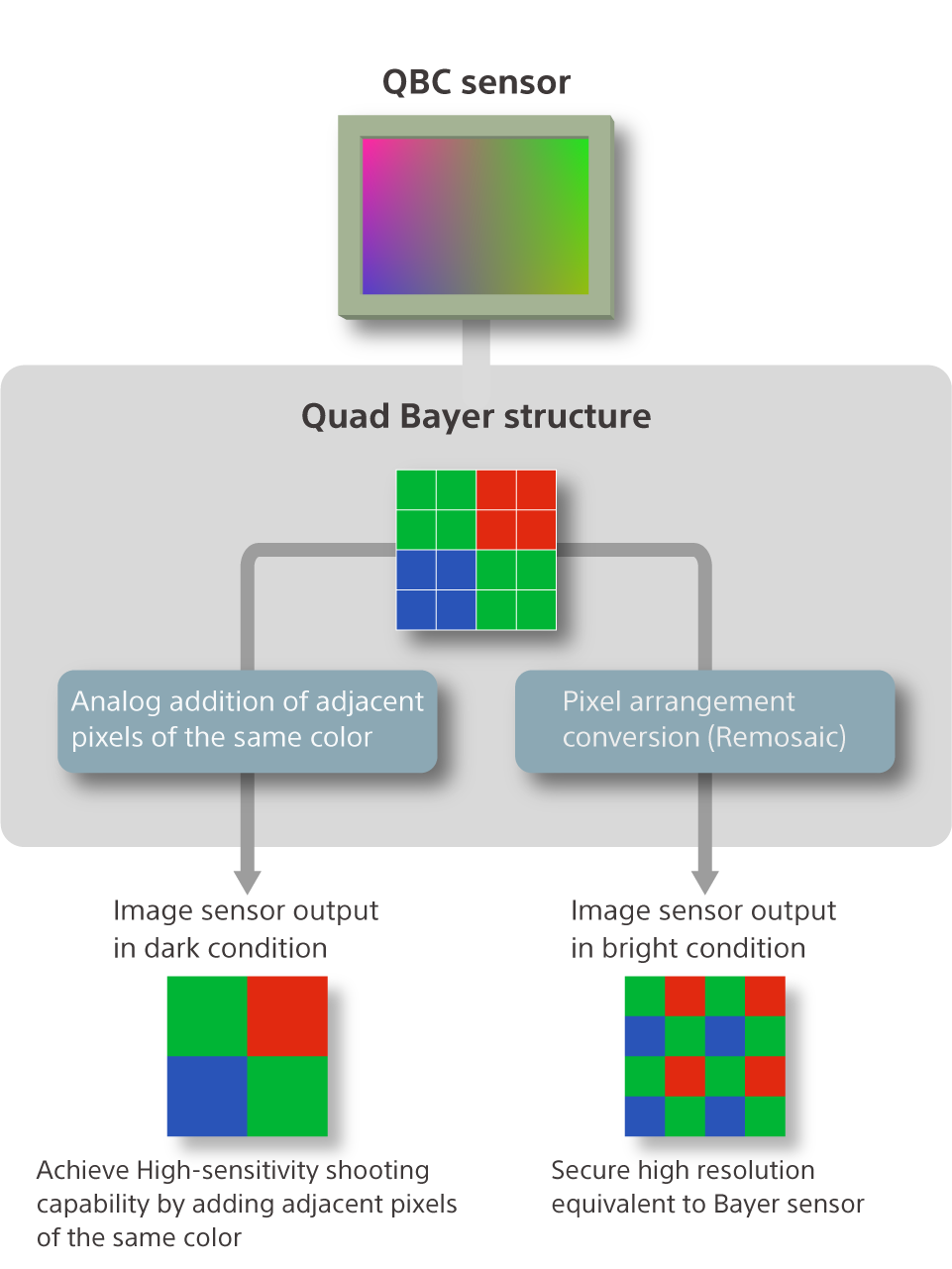
Advantages of Quad Bayer Coding (QBC) – High sensitivity and high resolution in one sensor
The Quad Bayer structure means four adjacent pixels are clustered with the same-color filters. In this way, high sensitivity and high resolution can be achieved in one sensor. It can, for example, prevent resolution loss in a low-illuminance environment and produce low-noise nightscape photos.

How was QBC invented?
Smartphone cameras have been rapidly improving their image quality for the last few years. The high demand for better quality images is driving the trend to miniaturize pixels in the image sensor for smartphones so that more pixels can be crammed in to achieve higher resolutions. However, the miniaturization of pixels comes with a tradeoff: the sensor sensitivity must be compromised.

Addressing this problem, Sony has developed a pixel array which is called QBC. It minimizes the sensitivity loss due to physical size reduction of a pixel. The technology is in a sense specifically developed for smartphone image sensors, for larger sized sensors, such as ones applied in SLR cameras, can accommodate larger pixels and not requiring pixel miniaturization.

What is QBC?
When shooting in an environment of low illuminance, such as nightscapes, adjacent four pixels are clustered to create per-unit image signal that is four times greater than that of a single pixel.

By adding of adjacent pixels in analog, loss of resolution is prevented, enabling to reduce noise in the resulting image. The result is the enhanced sensitivity in low-illuminance environments, enabling low-noise, bright images for photos and movies. Meanwhile, in high-illuminance environments, such as outdoor in daylight, the sensor can revert the pixels to the Bayer structure by advanced processing of array conversion (remosaic) to achieve the high resolution of Bayer sensors.


Sony’s original array conversion circuit is integrated into the image sensor chip, which enables processing of array conversion (remosaic) within the sensor as opposed to the conventional software-based conversion. This contributes to low power consumption compared to software processing. The built-in array conversion circuit also enables real-time processing, so it can be leveraged when capturing videos.

Posted in 3rd Party Cameras| Tagged , , | 3 Comments