


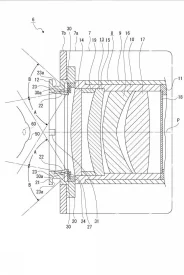
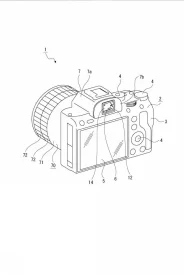
A patent from Sony, which uses the user’s eye to select AF points, has been discovered, similar to what Canon is doing in cameras like the Canon EOS R3 and Canon EOS R1. This technology could show up on a future camera like the Sony a9IV or Sony A1III.
- [Registration date] 2025-10-06
- [Issue date] 2025-10-15
- [Title of invention] Viewfinder and imaging device
- [Application number] P 2023506776
- [Application date] 2022-01-11
- [Patent holder]
[Identification number] 000002185
[Name] Sony Group Corporation - [
0001]
The present technology relates to a technical field regarding a finder that displays an image of a subject when photographing, and an imaging device equipped with the same. - [Background Art]
[0002]
Some imaging devices, such as video cameras and still cameras, are equipped with a viewfinder that displays an image of a subject during shooting. The viewfinder is used to determine the visual composition of the image before shooting, to check the image before and after shooting, and to adjust the focus, and is installed as a viewing window or a monitor (display). - [0003]
Some such viewfinders are equipped with a gaze detection device that detects the user’s gaze in order to perform autofocus when taking a photograph, etc. (see, for example, Patent Documents 1, 2 and 3). - [0004]
Autofocus based on the detection results of such a gaze detection device is performed by reflecting detection light, such as infrared light, emitted from the light-emitting unit on the cornea, receiving the reflected detection light by the light-receiving unit, and calculating the position of the pupil based on the received detection light. - [0009]
However, in a configuration in which the above-mentioned gaze detection device is incorporated into a viewfinder, space is required inside the viewfinder to place each part of the gaze detection device, which means that the viewfinder tends to become larger, and the entire imaging device in which the viewfinder is installed also tends to become larger. - [0011]
On the other hand, when detecting the gaze using the gaze detection device described above, if the detection light emitted from the light-emitting unit is distributed over a wide area of the cornea, the detection light reflected by the cornea is likely to be blocked by individual differences such as the shape of the eyelids and eyes, and the detection light may not be received by the light-receiving unit, preventing proper autofocusing. - Therefore
, it is desirable that the visual line detection device be constructed so that the detection light emitted from the light emitting section is distributed over a narrow range of the cornea, particularly in the vicinity of the pupil. - [0013]
Such distribution of the detection light emitted from the light-emitting unit over a narrow range of the cornea can be achieved by positioning the light-emitting unit close to the optical axis of the eyepiece optical system, but if the light-emitting unit is positioned close to the optical axis of the eyepiece optical system, the light-emitting unit may block the photographer’s field of view, causing problems with photography. - [0014]
Therefore, an object of the finder and imaging device of the present technology is to improve the detection accuracy of line of sight detection without increasing the size.
via asobinet